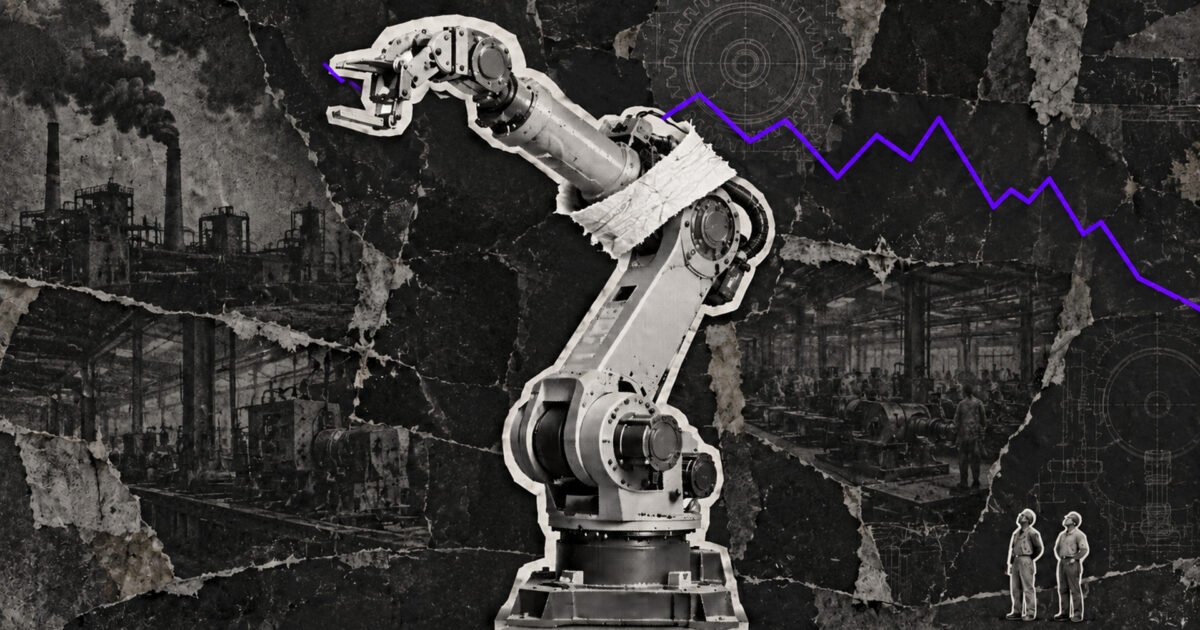
Outdated equipment and high labor costs affect industry productivity and present a challenge for the upcoming administration.
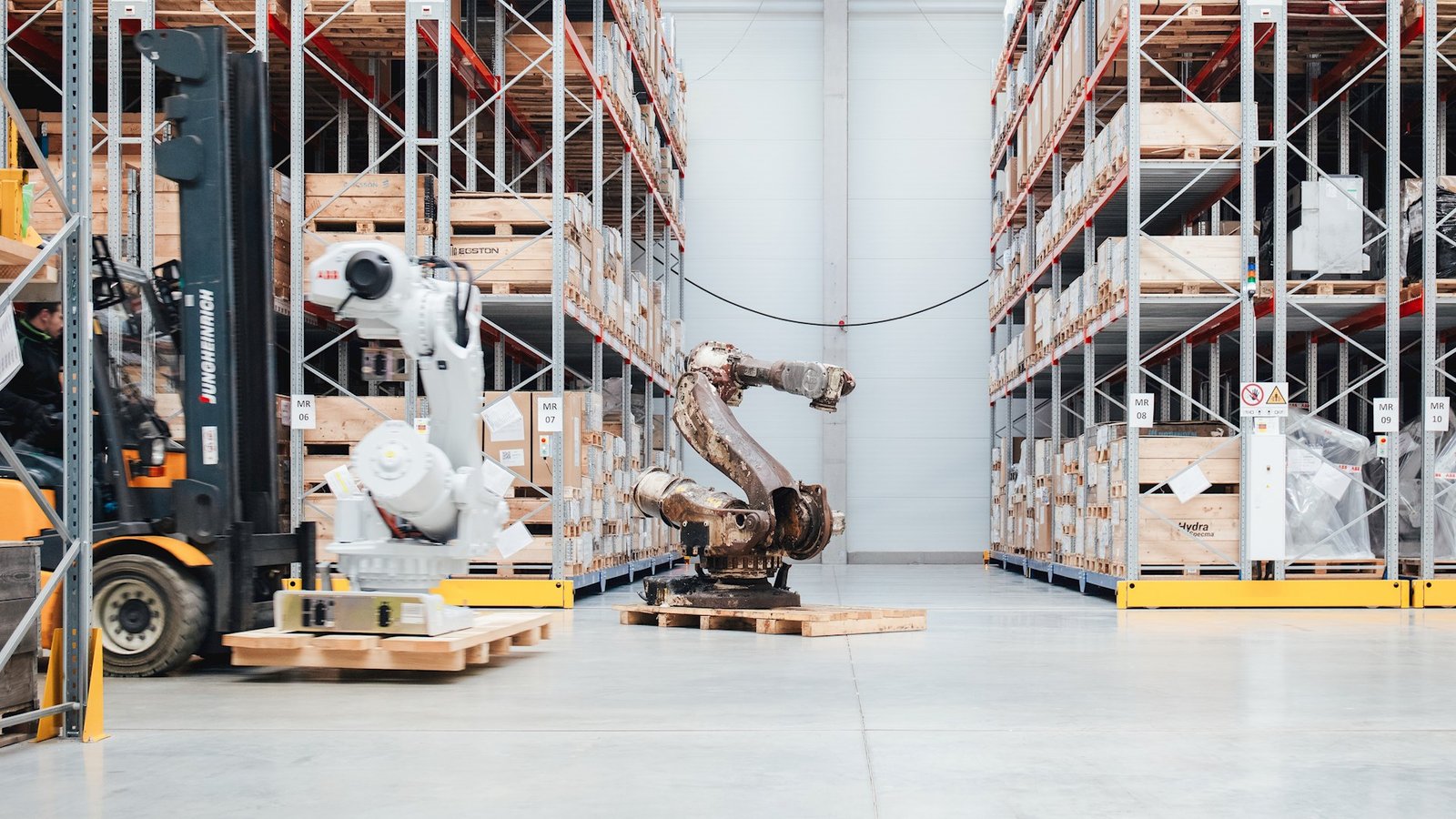
Ten to fifteen industrial robots are delivered to ABB Robotics unit in Sorocaba, São Paulo every month. These robots have been performing repetitive tasks in vehicle assembly lines for years.
Industrial robots at the multinational workshop are dismantled, upgraded, and tested before being resold. Retired equipment typically costs 40% to 60% of the price of a new one and is commonly purchased by industries like machinery, food, plastics, or auto parts.
The market for these robots is sustained by an aging industrial park.
On average, machines in the Brazilian industry are 14 years old, and 38% of them are near or have already surpassed the ideal lifespan recommended by manufacturers, as per a survey by the National Confederation of Industry (CNI).
“They are carefully utilizing all available resources,” according to Rafael Cagnin, chief economist and executive director of the Institute for Industrial Development Studies, the IEDI.
The outdated machine is less efficient and consumes more energy, causing a halt in the line’s renewal. Retrofitting has emerged as a cost-effective solution for those looking to upgrade to automation with limited capital.
Also be sure to read
- Fiat’s 50th anniversary celebration in Minas Gerais reflects the evolving Chinese presence in Brazil’s industry.
- Brazil’s economy is most at risk from Donald Trump’s new tariff.
The connection between a car manufacturer and a smaller company also illustrates the challenge Brazil faces in disseminating technology throughout its production system and contributes to the country’s longstanding issue of low productivity since the 1980s.
The second report of the special series by InvestNews discusses the industry’s impact on the country’s productivity and the obstacles that need to be overcome. These challenges will be faced by the upcoming government, regardless of the election outcome, through sectoral policies and decisions on investment priorities and tax benefits for service companies and agribusiness.
We are talking about the challenge of advancing oil exploration frontiers and making decisions on significant investments and commitments for exploitation in the context of the pre-salt expiration period.
In 2025, each hour worked in Brazil is estimated to produce $21.2 in terms of purchasing power parity, equivalent to 26% of the productivity of the United States and 62% of Chile, according to the International Labour Organization (ILO). This measure considers factors such as machinery, factory layout, workforce skills, and infrastructure.
The demographic dividend, responsible for approximately 70% of the average GDP per person in the 1990s, has now started to have a negative impact. As the population ages, future economic growth will increasingly rely on individual productivity per hour.
Global automation suppliers are present in the country and there are funding options available, yet the Brazilian industry purchases a low number of robots. What is the reason for this?
The code listens for a message from a specific origin, checks for specific data parameters, and adjusts the height of an embedded chart accordingly.
Plants without machinery
Brazil is not listed in the top ten countries for new robot installations according to the latest survey by the International Robotics Federation. In 2024, there were an average of 132 robots in use for every 10,000 manufacturing workers globally. South Korea led the rankings with 1,220 robots, while Mexico, with its automobile industry integrated into US supply chains, had 62 robots.
Adrian Covi, the manager of ABB Robotics General Industries for South America, mentions statistics showing that Brazil has 19 robots for every 10,000 workers, with 139 in the automotive sector and 13 in other industries.
“We conduct assessments by visiting the client’s facility to examine all operations and assist them in identifying the areas where they would see the most immediate advantages from incorporating additional robots into their manufacturing process,” Covi explains.
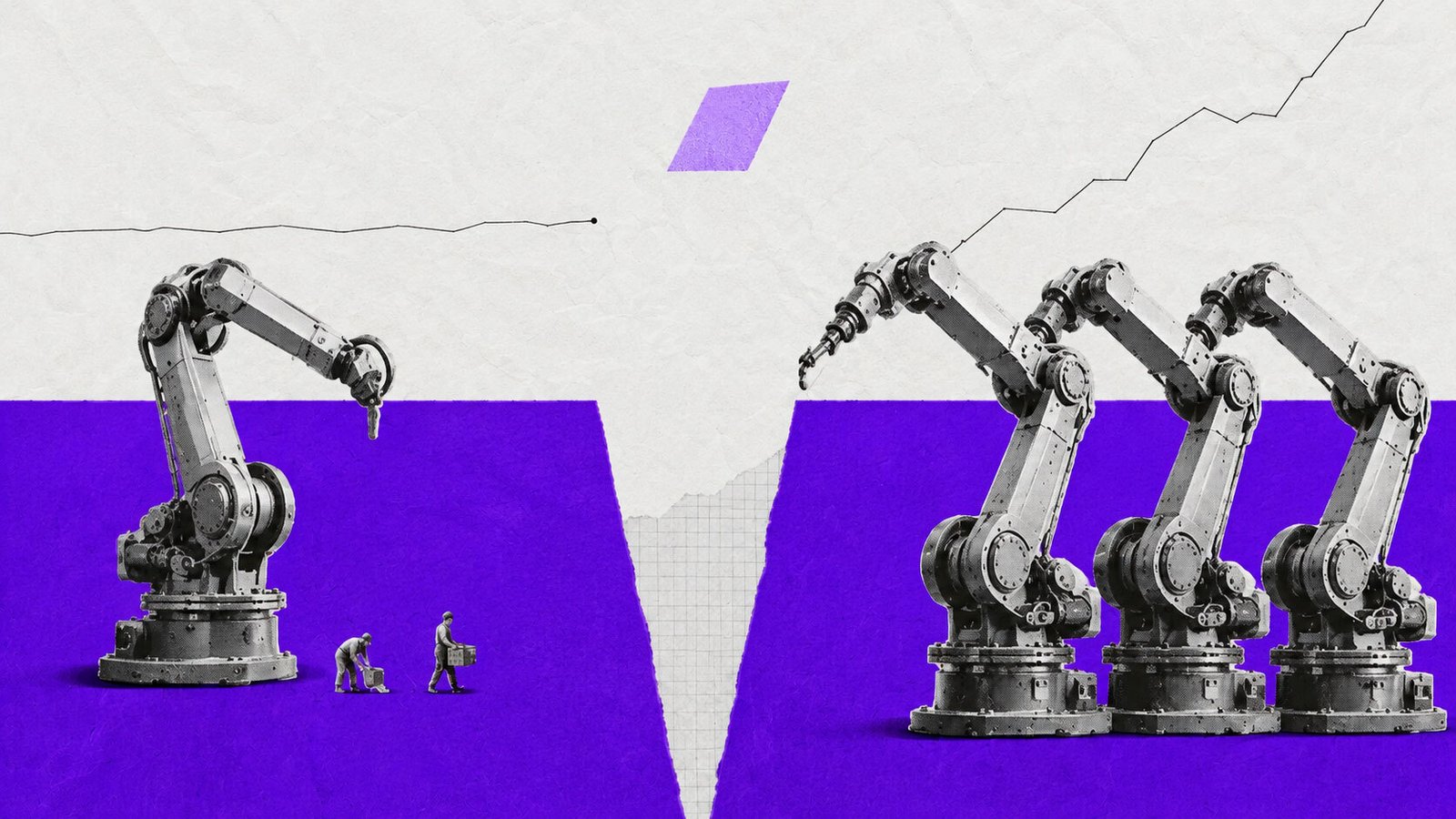
Rafael Cagnin from IEDI mentions that Brazil experiences a “structural heterogeneity” among its industrial sectors, a common occurrence in developing nations where advanced companies coexist with outdated production structures.
Brazil has some outstanding islands within a field that lacks technological advancements, productivity, and management skills.
Embraer and WEG are able to compete internationally with cutting-edge technology, supported by a network of smaller manufacturers reliant on the domestic market and limited access to financing.
The matter of concern
The process of deciding to replace a machine starts with a financial evaluation. A business may choose to purchase the equipment, bear the production risks, and wait for returns over several years. Alternatively, investing the same capital in government bonds offers lower-risk returns.
Selic stands at 13.75% annually in September, with IPCA showing a 4.22% accumulation over twelve months, resulting in a retrospective real interest rate close to 9.5%. Industrial investment must generate returns higher than this figure to be justified.
The individual must expect a higher return on investment when deciding to expand a production line or replace machinery compared to a risk-free investment in the financial market, particularly with a government bond, according to Cagnin.
Large organizations borrow money internationally at a cheaper rate, while small and medium-sized businesses rely on local banks or their own savings, leading them to delay upgrading their operations during periods of decreased sales.
As labor becomes more scarce and wages increase, economists believe that investing in machinery is crucial for boosting worker productivity and overall production.
The issue in Brazil is that there are obstacles preventing the investment needed to increase efficiency and productivity.
The issue with taxes
The Sorocaba branch of ABB Robotics, which covers approximately 4,000 square meters, houses facilities for training, workshops, assembly, and cell testing, but does not produce robots.
ABB Robotics operates three robot arm manufacturing facilities in China, the United States, and Sweden. Due to logistical reasons, the company imports products to Brazil mainly from China. Brazilian partners are responsible for producing claws, tools, and vision systems, while local engineering works on their development.
The cost of automation in Brazil is not solely determined by the financial aspect, but also by trade policies due to the imported robotic arm.
In February, the government increased the Import Tax on a wide range of machinery and equipment, including a 20% tax on robotic arms. The industry responded, and by the end of the month, some of the increase had been reversed. Over a hundred products saw their tax return to zero, while fifteen others returned to their previous tax level.
The movements illustrate the journey and evolution of modernizing the industry, especially when determining the return on investment for a robotized cell.
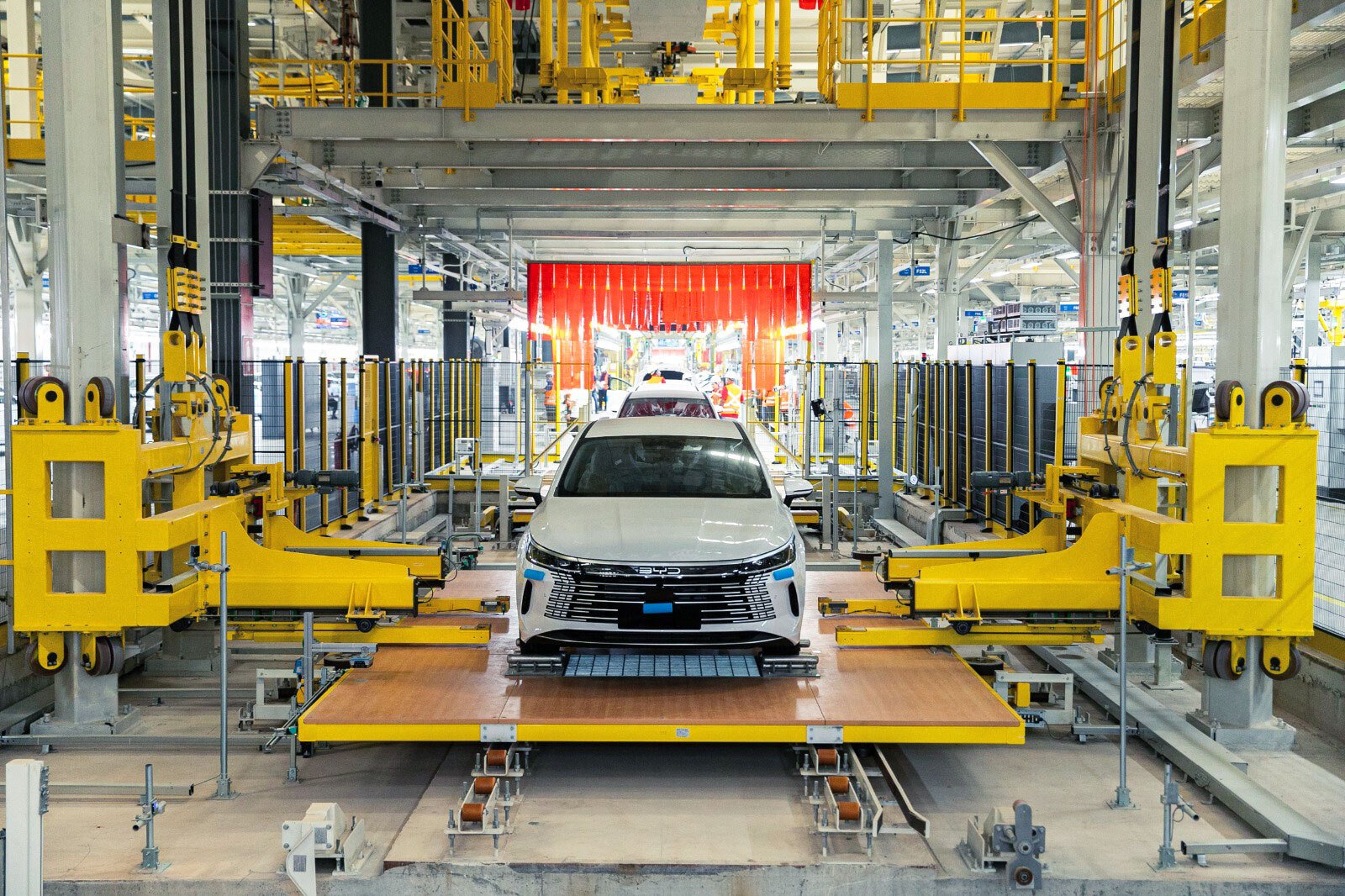
The robot from China mentioned in the Brazilian story
In 2024, 542,000 industrial robots were installed globally, with China alone accounting for 295,000, according to IFR. Asian countries, led by China, accounted for 54% of the new installations and captured 57% of the market share.
In the initial three months of 2026, China accounted for 36.2% of Brazil’s machinery and equipment imports, while the United States, Germany, and Italy combined for 29.8%, as per a study conducted by Abimaq.
The BYD factory in Camaçari, Bahia, exemplifies this. ABB China supplied around 200 painting robots for the initiative, with the Brazilian branch overseeing their setup at a cost of approximately $1 million in services and labor.
The 200 arms, produced in China, are integrated into the Brazilian market according to the IFR methodology, which categorizes installations by country and industry. Statistics will document the upgrading of a major factory, with production and a significant portion of the supply chain located overseas.
In Sorocaba, secondhand robots take a different path, moving from the automotive hub to manufacturing facilities with a ratio of 13 machines per 10,000 employees.
The rate of this flow will determine the extent to which technological progress in major factories influences the overall industry, as well as the level of productivity gained per hour worked by a rapidly expanding workforce.