Afya and Yduqs have merged to form a new major player in the education and medical sectors, generating revenue of R $ 9.4 billion.
Afya and Yduqs have agreed to merge their businesses, forming one of the largest education groups in the country, generating annual revenue of R$9.4 billion. The deal was announced by the companies on Wednesday and is subject to approval from shareholders and regulatory authorities.
The company brings together the top provider of medical education in the nation, along with one of the largest education organizations in the country that concentrates on higher education.
The goal of the operation is to merge two complementary higher education platforms in Brazil, as stated by Yduqs.
Both groups share a focus on courses that are seen as high-value assets, offering greater profitability than the typical higher education offerings.
Afya, currently listed on Nasdaq in the United States, will be incorporated by Yduqs, listed on B3 in the New Market segment, through the exchange of actions.
Shareholders will have control in Afya, with 69% of the company’s issued social capital post-merger held by them, while Yduqs shareholders will hold 31%.
Bertelsmann, a German group, will hold a 47.4% stake in Afya controller, while the Esteves family, founders of Afya, will have a 7.6% stake. Advent, an American fund, will hold 5.3%, and the Zaher family of Yduqs will have 4.8%.
Kay Krafft, CEO of Bertelsmann Education, will serve as the chairman of the board alongside Virgilio Gibbon, CEO of the new company. Rossano Marques, the current CEO of Yduqs, will lead the Higher Education division, excluding the Medicine unit.
Also read
- Business Review in More Doctors III provides insight into why Afya is interested in Yduqs.
- The increase in medical schools has surged, leading to a demand for quality assurance.
The deal finalizes discussions that began a few months back and were officially acknowledged by both companies in August. At that point, Afya and Yduqs mentioned that the talks were in their initial phase and did not include any formal obligations.
The strategy became more effective this year when the federal government blocked one of Afya’s main pathways for growth: the establishment of new medical positions, as reported by sources interviewed by InvestNews.
The Ministry of Education canceled the More Doctors III process in February, which could have approved nearly 6,000 spots in private medical schools. Afya planned to challenge the creation of around 1,400 yearly positions.
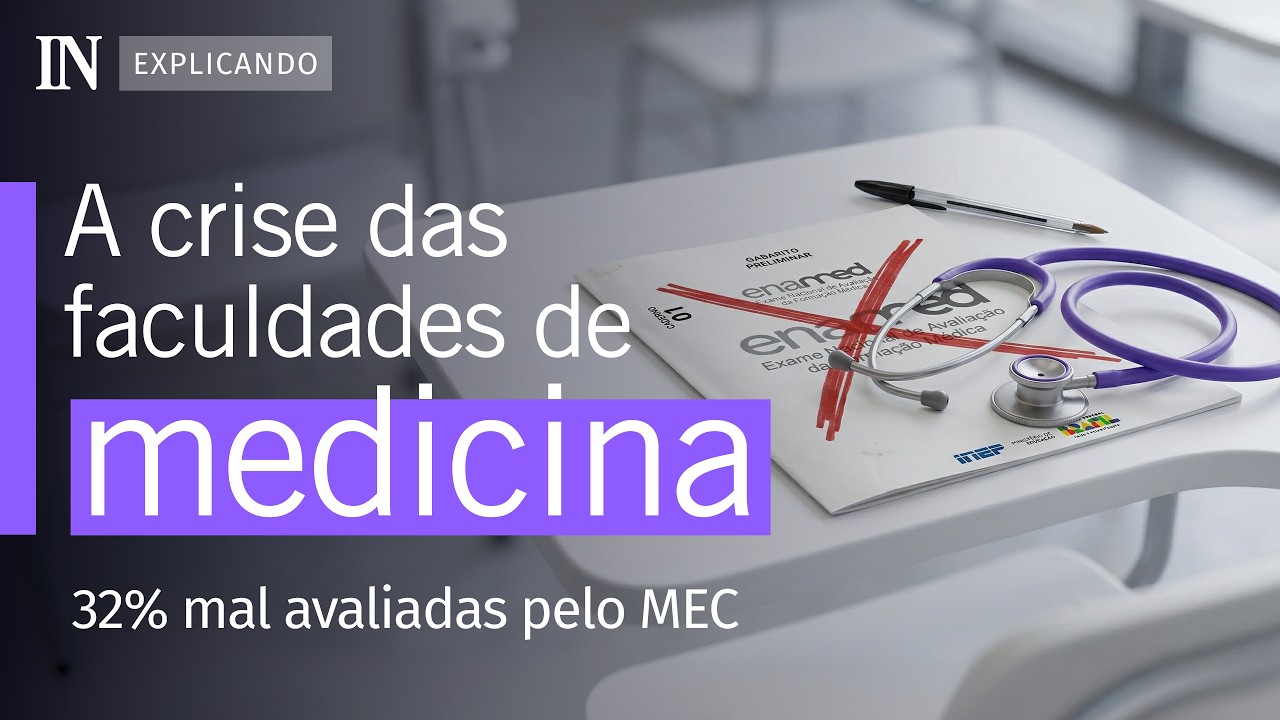
The Ministry of Education decided to raise standards for new openings due to lower-than-expected scores on Enamed, as reported by InvestNews in March.
The six-year duration of the medicine program could lead to an increase of over 8,000 students based on demand when the courses are fully developed. At the current average price, this capacity could generate nearly R$ 1 billion in yearly revenue.
In recent years, medical education has emerged as a secure refuge for educational institutions due to its unique characteristics: high average fees, low dropout rates, high demand, and potential for growth as the number of doctors is lower compared to developed countries.
Expansion in education originates from various sources.
Afya relied more on acquisitions as it was unable to open new positions. Yduqs provided the group with quick growth in Medicine and a broader reach beyond this area.
Yduqs, the owner of Stacio, Wyden, and Ibmec, operates a large digital higher education system. It also oversees IDOMED, which includes 18 schools with around 2,220 available spots per year and 11,400 medical students.
IDOMED generated R$ 694 million in revenue and R$ 343 million in operational result (Ebitda) during the initial semester. This accounted for 23% of Yduqs’ turnover and 35% of its adjusted Ebitda.
Afya has 3,768 approved medical vacancies by the Ministry of Education and approximately 26,400 students.
Combined, Afya and Yduqs generated a total revenue of R $ 4.97 billion and an adjusted Ebitda of R $ 1.89 billion in the initial six months of 2026.
In a calculation considering the most recent 12 months up to last June, the merged company records total revenue of R$ 9.4 billion, adjusted Ebitda of R$ 3.6 billion, and adjusted net income of R$ 1.3 billion.
“We will maximize the influence of Artificial Intelligence and other technologies on student education, while also utilizing the top practices of teaching platforms and maintaining the strengths, brands, and institutional capabilities of each company,” stated Virgilio Gibbon, the current CEO of Afya.
The new company will have distinct abilities in undergraduate education, continuing education, and medical practice solutions due to its varied portfolio, as stated by Rossano Marques.
Synergies amounting to R$ 2.2 billion
Synergies worth between R$ 2 billion and R$ 2.2 billion are expected to be achieved through cost optimization, reduction of general and administrative expenses, and capital investments. Approximately 80% of these synergies could be realized within the first three years following the completion of the deal, as per Yduqs’ market-related disclosure on Tuesday night.
In JPMorgan’s pre-merger analysis, the newly formed company would encompass around 50 schools, nearly 5,900 yearly openings, and 39.4 thousand students. This collective involvement would represent roughly 17% of the nation’s private educational opportunities.
The bank estimated that the merger could result in synergies totaling between R$ 1.3 billion and R$ 2.8 billion. Cutting general and administrative costs by 10% would lead to yearly savings of around R$ 200 million.
The merger represents a new stage in Yduqs’ consolidation. Cade had previously blocked Kroton, now Cogna, from acquiring Stacio in 2017. Despite discussions between the two companies in recent years, they have not come to an agreement.
Updated.