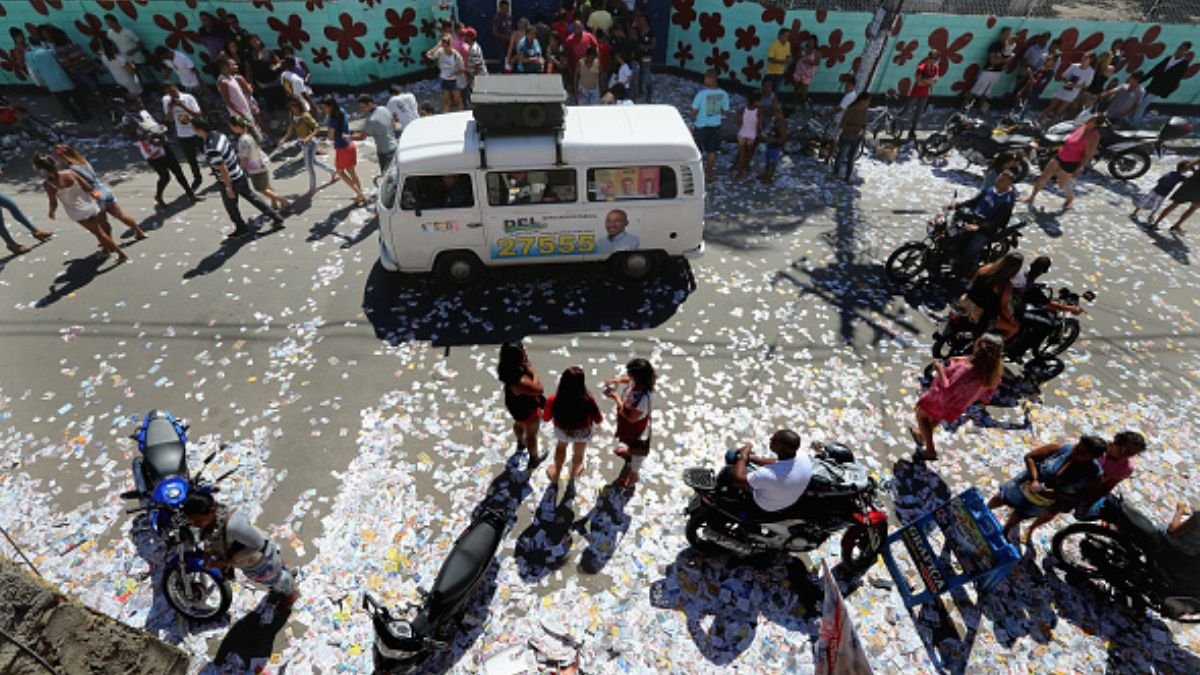
Forbidden actions on election day include distributing campaign materials, wearing clothing with political slogans, and using loudspeakers to promote a candidate.
On the day of the first round of elections in 2026, the campaign concludes, and electoral propaganda is no longer allowed. Restrictions apply to candidates, parties, supporters, and even voters at polling stations. Only silent individual expressions of candidate preference are allowed at this stage, with certain prohibitions starting before and on the eve of the vote.
The guidelines can be found in electoral laws and Resolution No 23.759/2026 from the Superior Electoral Court (TSE), focusing on the involvement of voters in the electoral procedure.
Committing electoral fraud is a serious offense.
The prohibition list on election day is in place to ensure voters can make decisions freely, which is why activities like campaigning or soliciting votes near polling stations are banned.
Also read
- Identifying deepfake activity in the 2026 election cycle.
- Brazilian election investments attract R$ 780 million in bets using stablecoins.
Distribution of printed electoral propaganda, known as “santinhos”, and littering the streets with these materials is prohibited. Also, approaching voters to persuade or influence them, and organizing collective or noisy demonstrations like groups of individuals in matching attire with flags are not allowed.
Car with humorous and entertaining audio
Public gatherings and rallies are not allowed 48 hours before voting and up to 24 hours after, and the use of sound cars is prohibited on election day as well.
Purchasing votes and acquiring earrings
Offering incentives to voters, such as distributing merchandise like t-shirts, keychains, or caps, is not allowed during the campaign period, including on election day.
The act of giving gifts as part of a political campaign could be seen as a form of vote-buying, and may result in penalties such as fines or even disqualification of the candidate after taking office. One exception is providing campaign workers with T-shirts or other campaign materials.
The cell phone remains outside the cabin.
Voters must hand over any electronic devices capable of recording votes upon arrival at the polling station, even if switched off. Those who refuse will be unable to vote, and their refusal will be documented. Police may be called if needed.
The regulation prohibits taking pictures and videos of the ballot screen to maintain voting secrecy and prevent vote buying and coercion for proof of vote selection.
What is allowed on election day
The voter is allowed to show support for a candidate, party, coalition, or federation privately and quietly within certain boundaries, using items like flags, brooches, stickers, and t-shirts. They can also bring a piece of paper with their chosen numbers into the voting booth.
The candidate is allowed to move around the sections, monitor the voting process and the vote counting, as long as they adhere to the access rules and refrain from campaigning or influencing voters at the polling station.
Sections close to arms
Collectors, shooters, and hunters known as CACs are not allowed to possess weapons and ammunition nationwide from 3 to 5 October. Additionally, the armed forces are prohibited from coming near or entering voting sites during this period without authorization. They must maintain a distance of 100 meters from the area, except for certain designated locations.
Prisons during election time
The law restricts arrests during the election period, protecting candidates, poll workers, and party officials from being detained 15 days before the vote until 48 hours after the election, unless for clear criminal acts.
The voter can only be detained between 17h on September 29 and 17h on October 6 in cases of serious crimes, criminal convictions without bail, or violation of safe conduct orders issued by Electoral Justice to protect another voter.
The enforcement of the law known as “Law Seca” varies by state.
The electoral law does not apply at the federal level. Each state, in conjunction with the Regional Electoral Court and public safety officials, determines the prohibition of alcohol sales on election days.
Campaign regulations concluding prior to the start of the initial shift
Some restrictions will be in place before the election, outlining the deadlines for different types of propaganda based on the TSE electoral calendar.
| Date | Last day to |
| Thursday, October 1st | Free promotion on radio and TV. Scheduled comics with fixed sound from 8am to midnight, with two-hour extension at the closing rally. Radio and TV debates may continue until 7am on October 2. Paid or boosted internet advertising, with sealing until October 5. Also, starting on this date, the ban on new synthetic content created with AI that depicts the image, voice, or actions of a candidate or public figure, lasting up to 24 hours after the election |
| Friday, October 2 | Paid advertisements in newspapers and magazines |
| Saturday, 3 October | Usage of loudspeakers and sound amplifiers, distribution of printed materials, processions, motorcades, and parades until 10 pm |
| Sunday, 4 October | Only individual and peaceful expressions by voters |
Where should irregularities be reported?
Irregularities like unidentifiable election advertising can be reported through the Pardal app from the Electoral Justice. The TSE Electoral Disinformation Alert System (Siade) is the platform to address misinformation regarding polls and the electoral process.